Since launching in July 2025, the Community Resource Program has quickly become a vital support system for individuals navigating disability services without Targeted Case Management (TCM)–eligible Medicaid. In less than a year, the program has welcomed 195 individuals, with 156 currently receiving guidance from just two Community Resource Specialists.
The program was designed to bridge a critical gap for individuals who qualify for Department of Mental Health services but lack the Medicaid coverage required to access case management. By offering information, hands on guidance, and connections to community supports, the program empowers people to access the resources they need to thrive in the community, connect with others and achieve their goals.
One need has risen far above the rest: help obtaining Medicaid.
Medicaid is the primary lifeline for millions of individuals with disabilities. It is the nation’s single largest source of funding for both medical care and the daily supports needed to live independently. By covering specialized services that private insurance rarely includes, Medicaid helps individuals with disabilities maintain their health, avoid unnecessary institutionalization and meaningfully participate in their communities. For the people served by the Community Resource Program, accessing Medicaid often determines whether they can receive case management, home and community-based services or financial relief that keeps them stable.
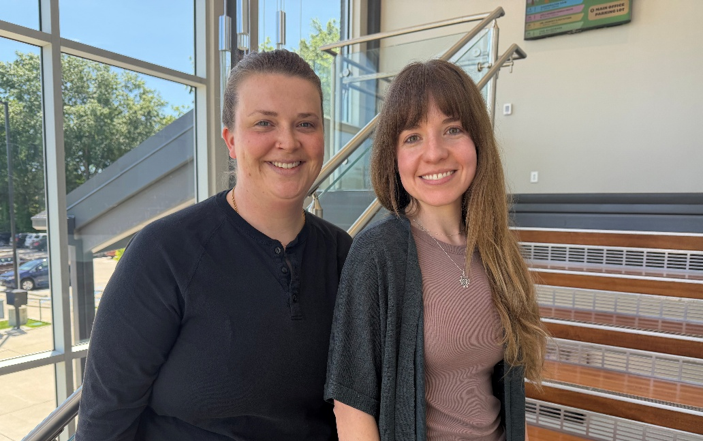
Even though the program is new, its impact is already remarkable. Since the program launched in July 2025, Community Resource Specialists Kiah Wright and Lexie Holst-Burri have helped 24 individuals apply for Medicaid for the first time, re-apply to restore coverage, or correct administrative errors that prevented their eligibility data from syncing with DMH’s system.
Transitions into case management and waiver programs are especially meaningful. This achievement not only opens the door to case management services but also strengthens long-term stability and access to care.
“When somebody gets Medicaid and then connects to a day program or in home supports, that’s when it feels really exciting,” Lexie shared.
One success story stands out in particular. Lexie worked with a woman who believed she would have to quit her full-time job to qualify for Medicaid. Instead, Lexie connected her with the Ticket to Work Health Assurance Program (TWHA), which allowed her to keep working while also obtaining Medicaid coverage.
TWHA is a Medicaid program that preserves health coverage for persons with disabilities, age 16 through 64, who are employed. The program allows participants to be eligible for coverage with higher income limits and excludes assets like retirement accounts and pensions. It removes the biggest barrier, losing Medicaid due to work, while keeping costs low and benefits comprehensive.
“She was able to access individualized supports like an in-home PA (Personal Assistant), keep her job and not have to change anything,” said Lexie. “She opened a MO Able account for her assets and got every single thing she needed without sacrificing her job, which she loves so much. She believed for several years that she would have to quit her job to get the healthcare that she needed. And we were like, actually, we found this other path, and it worked out really well.”
When asked what motivates them in their work, both specialists expressed the same sentiment: everyone they meet genuinely needs help.
Lexie said, “Every family we’ve met genuinely needs assistance, guidance, direction, connection, all of it. People with identifiable needs don’t know where to go, don’t know where to start, and we are able to help them. It’s a great feeling.”
Every approval, every connection, every resolved application represents something much bigger than a checkmark. And for the individuals working inside the Community Resource Program, that is what makes the work worthwhile.